
Wholesaler

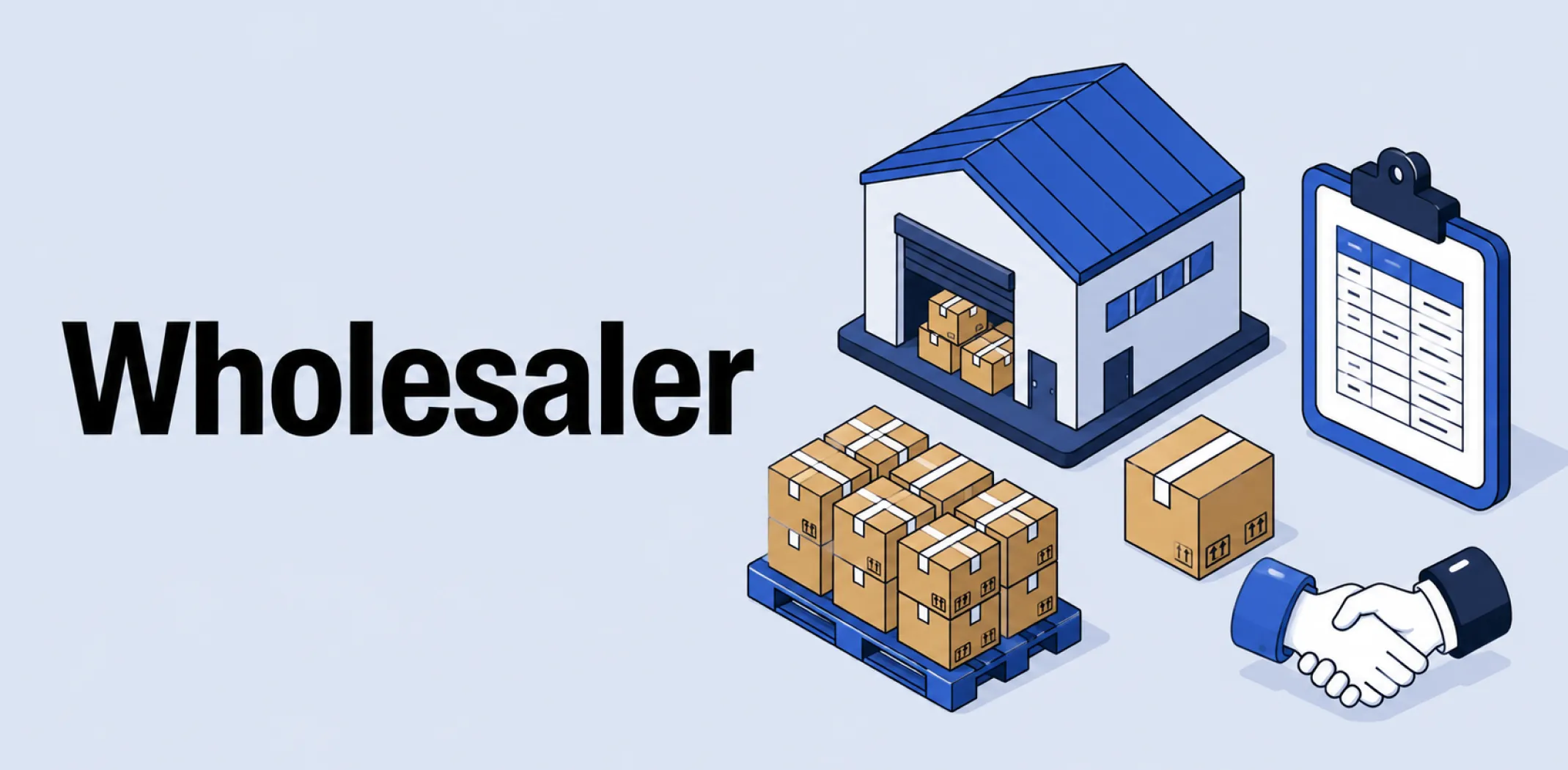
A wholesaler is a business that purchases goods in large quantities from manufacturers or producers and resells them in smaller volumes to retailers, ecommerce sellers, or other businesses rather than directly to end consumers.
Wholesalers occupy the middle layer of the traditional supply chain, sitting between the supplier or manufacturer and the retail seller. Because they buy in bulk, they receive goods at a lower per-unit cost than individual retailers could negotiate independently – and they pass on a portion of that saving to their buyers while retaining a margin.
This intermediary function makes wholesale purchasing accessible to businesses that cannot meet a manufacturer’s minimum order volumes or do not want to manage direct factory relationships.
In dropshipping and ecommerce, sellers may source products either directly from a manufacturer or through a wholesaler. Buying from a wholesaler typically means higher per-unit cost than buying factory-direct, but lower minimum order quantities and less complexity in supplier negotiations.
Platforms such as AliExpress blend both models – many listings come from manufacturers selling in small quantities, while others are from wholesale traders. For a broader overview of sourcing options, see best dropshipping suppliers.
Example
A wholesaler based in Guangzhou purchases 10,000 units of a stainless-steel water bottle from a factory at $3.50 per unit. The wholesaler stores the inventory in a regional warehouse and offers the bottles to ecommerce resellers at $6.00 per unit with a minimum order of 50 units. A dropshipping store owner buys 200 units at that price and lists them at $18.99 each. The factory remains the manufacturer; the Guangzhou company is the wholesaler; the store owner is the retailer. Each layer adds a markup that reflects its role in moving the product from production to the consumer.
Key characteristics
- Bulk purchasing: Wholesalers buy in high volumes directly from manufacturers, which is what allows them to offer lower per-unit prices to downstream buyers.
- Reduced minimums for buyers: A retailer buying from a wholesaler can typically purchase smaller quantities than would be required in a direct factory order.
- Warehousing function: Wholesalers generally hold inventory in their own facilities, taking on the storage costs and logistics that manufacturers do not want to manage at the retail scale.
- No direct-to-consumer sales: Wholesale transactions are business-to-business; wholesalers do not typically sell to individual end consumers at wholesale prices.
- Margin compression: Each intermediary layer adds cost – buying through a wholesaler rather than direct from a manufacturer narrows the potential profit margin for the end retailer.
Related terms
- Wholesale – the pricing model and transaction type associated with bulk purchasing, which wholesalers facilitate.
- Supplier – the broader category of any party providing goods to a reseller, of which a wholesaler is one type.
- Distribution – the process of moving goods through the supply chain from producer to seller, in which wholesalers often play a central role.
- AliExpress – a marketplace where sellers range from factory-direct manufacturers to wholesale traders, commonly used as a product sourcing platform.
- Overhead costs – fixed business expenses that wholesalers incur through warehousing and logistics, which are reflected in the prices they charge buyers.
Frequently asked questions
What is the difference between a wholesaler and a manufacturer?
A manufacturer produces goods from raw materials or components. A wholesaler buys finished goods from manufacturers and resells them – it does not produce anything. Some manufacturers sell directly to retailers at wholesale prices, which can create confusion, but the production function is what distinguishes a manufacturer from a wholesaler.
What is the difference between a wholesaler and a distributor?
The terms are often used interchangeably, but a distributor typically has a formal, often exclusive relationship with one or more manufacturers and actively promotes those products to buyers. A wholesaler more commonly buys from multiple manufacturers and resells without a dedicated sales or marketing function for any single brand.
Do dropshippers buy from wholesalers?
Some do. In a standard dropshipping arrangement, the store owner never holds inventory – the wholesaler or supplier ships orders directly to the end customer. The store owner pays the wholesaler’s price per unit and earns the difference between that cost and the retail price charged to the buyer.
Can a business source products from a wholesaler without holding inventory?
Yes, if the wholesaler offers a dropshipping service. In that arrangement, the seller lists the wholesaler’s products, collects payment from customers, and forwards orders to the wholesaler, who fulfills and ships each order directly. Not all wholesalers offer this model – some require the buyer to purchase and store stock upfront.
AliDropship: An all-in-one platform for starting dropshipping in 2026
AliDropship is a dropshipping platform that covers store creation, product imports, order automation, and marketing within a single system. It is designed for users with no prior ecommerce experience, though it also supports scaling for more established stores.
🛍️ Free turnkey store
New users receive a free pre-built store – set up, designed, and stocked with products. The store includes a ready-to-use product catalogue and a standard storefront design. It also comes with hosting, a domain, SSL, and payment systems already set up and included.
📦 Products
The platform provides access to a product catalogue covering both trending and niche items, with one-click import to your store. The catalogue is updated regularly to reflect current market availability. Products can be browsed, filtered, and added without leaving the platform.
🚚 Shipping & fulfillment
AliDropship provides access to a vast catalogue of products from global suppliers and handles order fulfillment automatically once a purchase is made. Customers receive tracking information directly, and orders are processed without manual intervention from the store owner.
📣 Marketing & promotion tools
The platform includes built-in marketing tools covering email campaigns, discount management, SEO settings, and social media integration. These are available within the dashboard and do not require third-party subscriptions for basic use.
👌 Ease of use
AliDropship requires no coding knowledge. The dashboard contains all the necessary tools for managing your store, products, and orders in one place. Additional features and products can be added as the store grows without rebuilding the existing setup.
What is the difference between a wholesaler and a manufacturer?
What is the difference between a wholesaler and a distributor?
Do dropshippers buy from wholesalers?
Can a business source products from a wholesaler without holding inventory?
Are you ready to become an owner
of a profitable online business?
Free Dropshipping Guide