
White Label

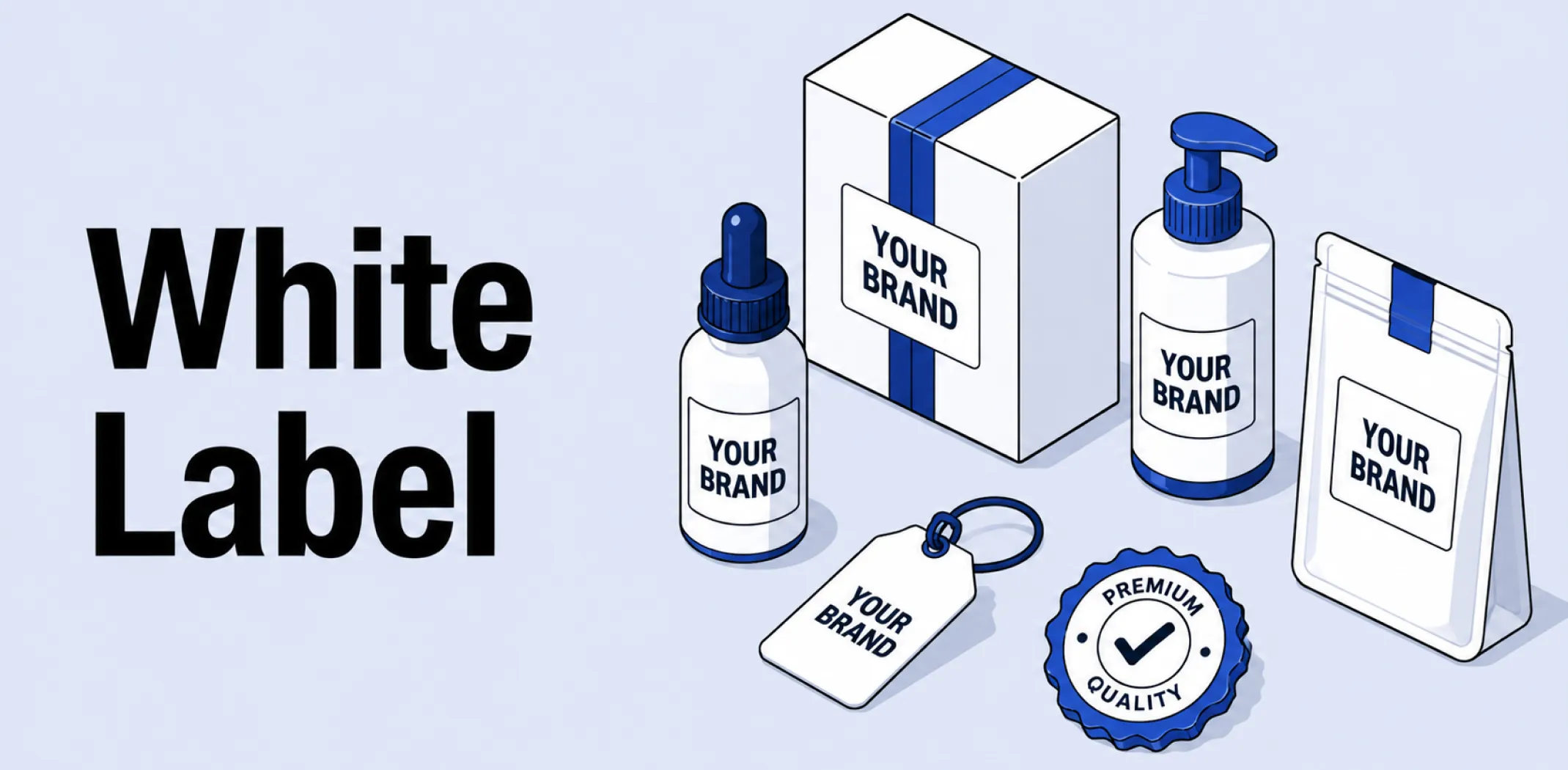
White label is a product or service manufactured by one company and rebranded and resold by another business under its own name, with no reference to the original producer on the final packaging or storefront.
The term originates from the practice of applying a blank white label to a generic product, leaving space for any reseller to print their own brand identity on top.
In ecommerce, white label products allow a store owner to present goods as proprietary offerings without investing in product development, tooling, or manufacturing. The reseller handles marketing, pricing, and customer relationships, while the manufacturer handles production and, in many cases, fulfillment.
White label differs from dropshipping in that the reseller typically takes ownership of the branded identity more explicitly – sometimes involving custom packaging, logo placement, or product inserts. It also differs from private label, where a retailer commissions a product built exclusively to their specification; white label products are standardized goods sold to multiple resellers simultaneously, each applying their own brand.
Example
A store owner selling home goods sources a generic ceramic diffuser from a manufacturer on AliExpress. The manufacturer offers the same diffuser to dozens of resellers; the store owner applies their own logo to the packaging, sets a retail price of $34, and lists it as a branded product in their store. The customer receives the product in branded packaging and has no visibility into the original manufacturer. The store owner’s margin is the difference between the wholesale unit cost and the retail price charged.
Key characteristics
- Shared manufacturing base: The same product is produced by a single manufacturer and distributed to multiple resellers, each branding it independently.
- Reseller-controlled identity: The business purchasing the white label product determines the brand name, logo, packaging design, and retail positioning.
- No exclusivity: Unlike private label arrangements, white label products are not exclusive to one reseller – competing stores may sell an identical product under a different brand.
- Lower development cost: Because the product already exists, the reseller avoids the cost and time associated with product design, prototyping, and manufacturing setup.
- Supplier dependency: Product quality, consistency, and availability remain under the manufacturer’s control, not the reseller’s.
Related terms
- Supplier – the manufacturer or distributor that produces the white label product and fulfills orders on behalf of the reseller.
- Dropship – a fulfillment method often used alongside white label arrangements, where the supplier ships directly to the end customer.
- Niche market – a focused customer segment that white label sellers often target by positioning a generic product with a brand identity tailored to that audience.
- Product positioning – the strategy a reseller uses to differentiate a white label product from competing versions of the same underlying item.
- Wholesale – the pricing structure typically used when a reseller purchases white label units in bulk from a manufacturer.
Frequently asked questions
What is the difference between white label and private label?
White label products are standardized goods manufactured for multiple resellers, each of whom applies their own brand. Private label products are made exclusively for one retailer, often to a custom specification. The key distinction is exclusivity: private label is unique to one buyer, while white label is available to many.
Is white label the same as dropshipping?
Not exactly. Dropshipping is a fulfillment model in which the supplier ships orders directly to the end customer. White label refers to the branding arrangement under which a reseller markets a manufacturer’s product as their own. The two can be combined – a store owner may sell white label products using a dropshipping fulfillment model – but they describe different aspects of the business structure.
Can white label products be sold on marketplaces like Amazon or Etsy?
Yes, though marketplace rules vary. Some platforms require that sellers accurately represent product origins and restrict certain types of rebranding. Sellers using white label products on third-party marketplaces should review each platform’s policies on brand registry, product claims, and listing requirements before listing.
What are the main risks of selling white label products?
The primary risks include lack of product exclusivity – competing resellers may sell the same item under a different name – and dependence on the manufacturer for quality control and stock availability. Because the reseller has limited influence over production, any change in the supplier’s output directly affects the branded product.
AliDropship: An all-in-one platform for starting dropshipping in 2026
AliDropship is a dropshipping platform that covers store creation, product imports, order automation, and marketing within a single system. It is designed for users with no prior ecommerce experience, though it also supports scaling for more established stores.
🛍️ Free turnkey store
New users receive a free pre-built store – set up, designed, and stocked with products. The store includes a ready-to-use product catalogue and a standard storefront design. It also comes with hosting, a domain, SSL, and payment systems already set up and included.
📦 Products
The platform provides access to a product catalogue covering both trending and niche items, with one-click import to your store. The catalogue is updated regularly to reflect current market availability. Products can be browsed, filtered, and added without leaving the platform.
🚚 Shipping & fulfillment
AliDropship provides access to a vast catalogue of products from global suppliers and handles order fulfillment automatically once a purchase is made. Customers receive tracking information directly, and orders are processed without manual intervention from the store owner.
📣 Marketing & promotion tools
The platform includes built-in marketing tools covering email campaigns, discount management, SEO settings, and social media integration. These are available within the dashboard and do not require third-party subscriptions for basic use.
👌 Ease of use
AliDropship requires no coding knowledge. The dashboard contains all the necessary tools for managing your store, products, and orders in one place. Additional features and products can be added as the store grows without rebuilding the existing setup.
What is the difference between white label and private label?
Is white label the same as dropshipping?
Can white label products be sold on marketplaces like Amazon or Etsy?
What are the main risks of selling white label products?
Are you ready to become an owner
of a profitable online business?
Free Dropshipping Guide