
Product Variant

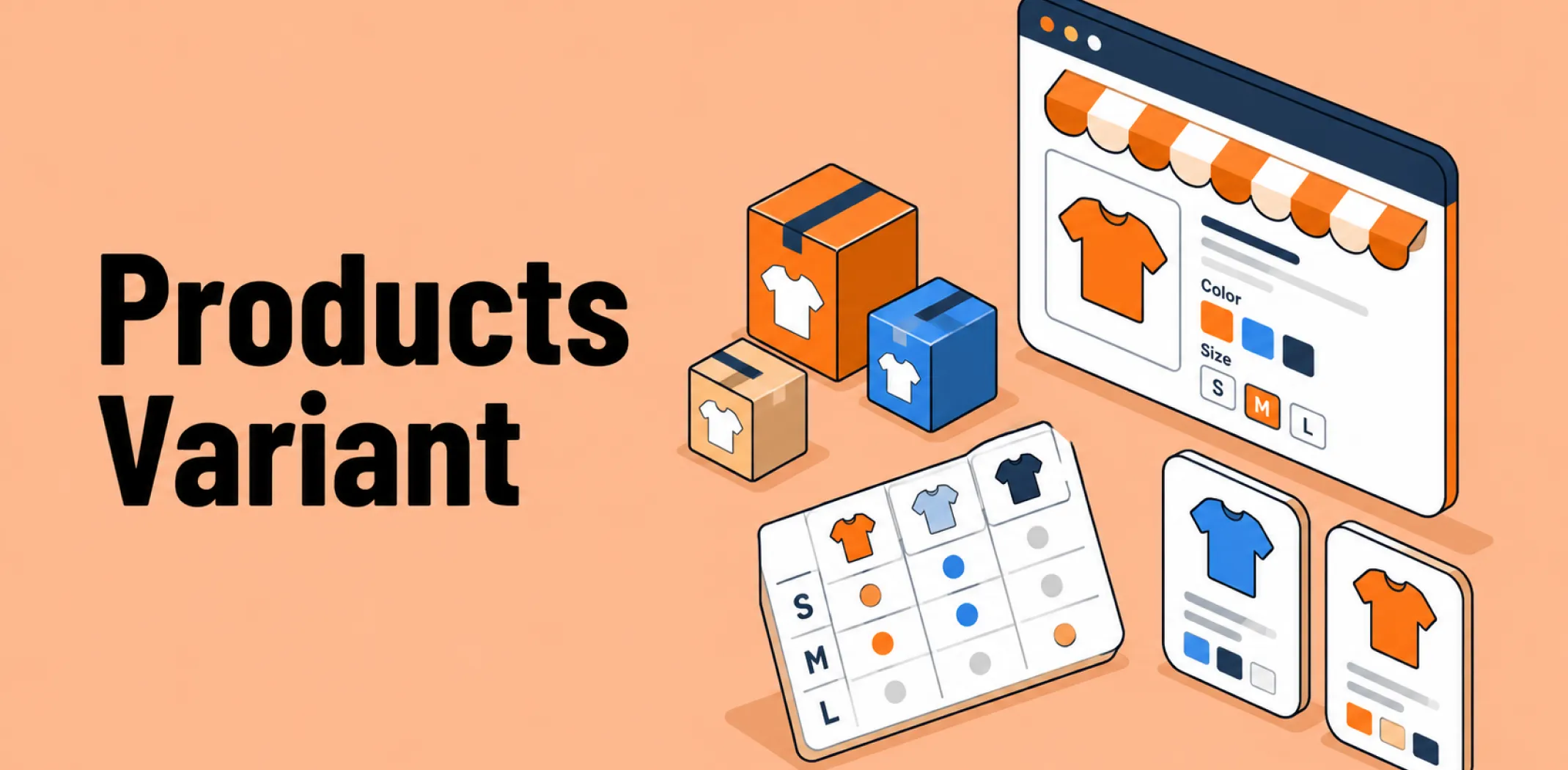
A product variant is a distinct purchasable version of a product, differentiated from other versions by one or more defining attributes such as size, color, material, or style.
In ecommerce, most physical products exist in more than one form. A t-shirt may come in five sizes and four colors, producing twenty possible combinations. Each of those combinations is a product variant.
Rather than listing each combination as a separate product, platforms such as WooCommerce and Shopify group all variants under a single parent product listing, allowing the buyer to select attributes before adding an item to the cart.
Product variants are closely related to ecommerce catalog management. Each variant typically carries its own SKU, price, and stock level, even though all variants share the same product page. This structure keeps the catalog compact while giving buyers full visibility of available options.
Example
A dropshipping store sells a ceramic coffee mug sourced from a supplier on AliExpress. The supplier offers the mug in three colors – white, black, and navy – and two sizes: 11 oz and 15 oz. The store owner creates one product listing with six variants, each assigned its own SKU and price. When a customer selects “Black / 15 oz” and places an order, that specific variant is forwarded to the supplier for fulfillment.
Key characteristics
- Attribute-based differentiation: Each variant is defined by a specific combination of attributes such as size, color, material, or finish.
- Shared parent listing: All variants of a product live under one URL and product page, reducing catalog duplication.
- Individual SKU assignment: Each variant receives its own stock keeping unit code, enabling separate inventory tracking and order routing.
- Independent pricing: Variants can carry different prices within the same listing – a larger size or a premium material may be priced higher than the base version.
- Stock-level separation: In inventory-holding models, each variant has its own stock count; in dropshipping, availability depends on the supplier’s own variant inventory.
Related terms
- Ecommerce – the broader commercial environment in which product variants are listed, managed, and sold online.
- Order fulfillment – the process of receiving, processing, and shipping a specific variant once a customer places an order.
- Supplier – the third party that stocks and ships each variant in a dropshipping arrangement.
- Wholesale – the pricing model through which suppliers offer variants to resellers in bulk or per-unit at cost price.
- Niche market – a focused segment of buyers whose specific preferences often drive which variants a store chooses to stock or list.
Frequently asked questions
What is the difference between a product variant and a separate product?
A product variant shares a parent listing with other versions of the same item and differs only by attribute – for example, color or size. A separate product is an entirely distinct item with its own listing, description, and positioning. The line can blur in practice, but the general rule is that variants serve the same core use case while separate products serve different ones.
Does each product variant need its own SKU?
Yes. In standard ecommerce practice, each variant is assigned a unique SKU to allow accurate inventory tracking, order routing, and supplier communication. Without individual SKUs, it becomes difficult to confirm which specific version of a product has been ordered or needs to be restocked.
How do product variants affect dropshipping?
In dropshipping, the store owner lists variants based on what the supplier offers. When a customer orders a specific variant, that variant’s details are forwarded to the supplier. If a supplier discontinues a variant, the store owner must update or remove it to avoid selling an unavailable option.
Can product variants have different prices?
Yes. Most ecommerce platforms allow independent pricing per variant. A larger size, a premium material, or a limited color may be priced differently from the default variant within the same listing.
AliDropship: An all-in-one platform for starting dropshipping in 2026
AliDropship is a dropshipping platform that covers store creation, product imports, order automation, and marketing within a single system. It is designed for users with no prior ecommerce experience, though it also supports scaling for more established stores.
🛍️ Free turnkey store
New users receive a free pre-built store – set up, designed, and stocked with products. The store includes a ready-to-use product catalogue and a standard storefront design. It also comes with hosting, a domain, SSL, and payment systems already set up and included.
📦 Products
The platform provides access to a product catalogue covering both trending and niche items, with one-click import to your store. The catalogue is updated regularly to reflect current market availability. Products can be browsed, filtered, and added without leaving the platform.
🚚 Shipping & fulfillment
AliDropship provides access to a vast catalogue of products from global suppliers and handles order fulfillment automatically once a purchase is made. Customers receive tracking information directly, and orders are processed without manual intervention from the store owner.
📣 Marketing & promotion tools
The platform includes built-in marketing tools covering email campaigns, discount management, SEO settings, and social media integration. These are available within the dashboard and do not require third-party subscriptions for basic use.
👌 Ease of use
AliDropship requires no coding knowledge. The dashboard contains all the necessary tools for managing your store, products, and orders in one place. Additional features and products can be added as the store grows without rebuilding the existing setup.
What is the difference between a product variant and a separate product?
Does each product variant need its own SKU?
How do product variants affect dropshipping?
Can product variants have different prices?
Are you ready to become an owner
of a profitable online business?
Free Dropshipping Guide