
Manufacturer

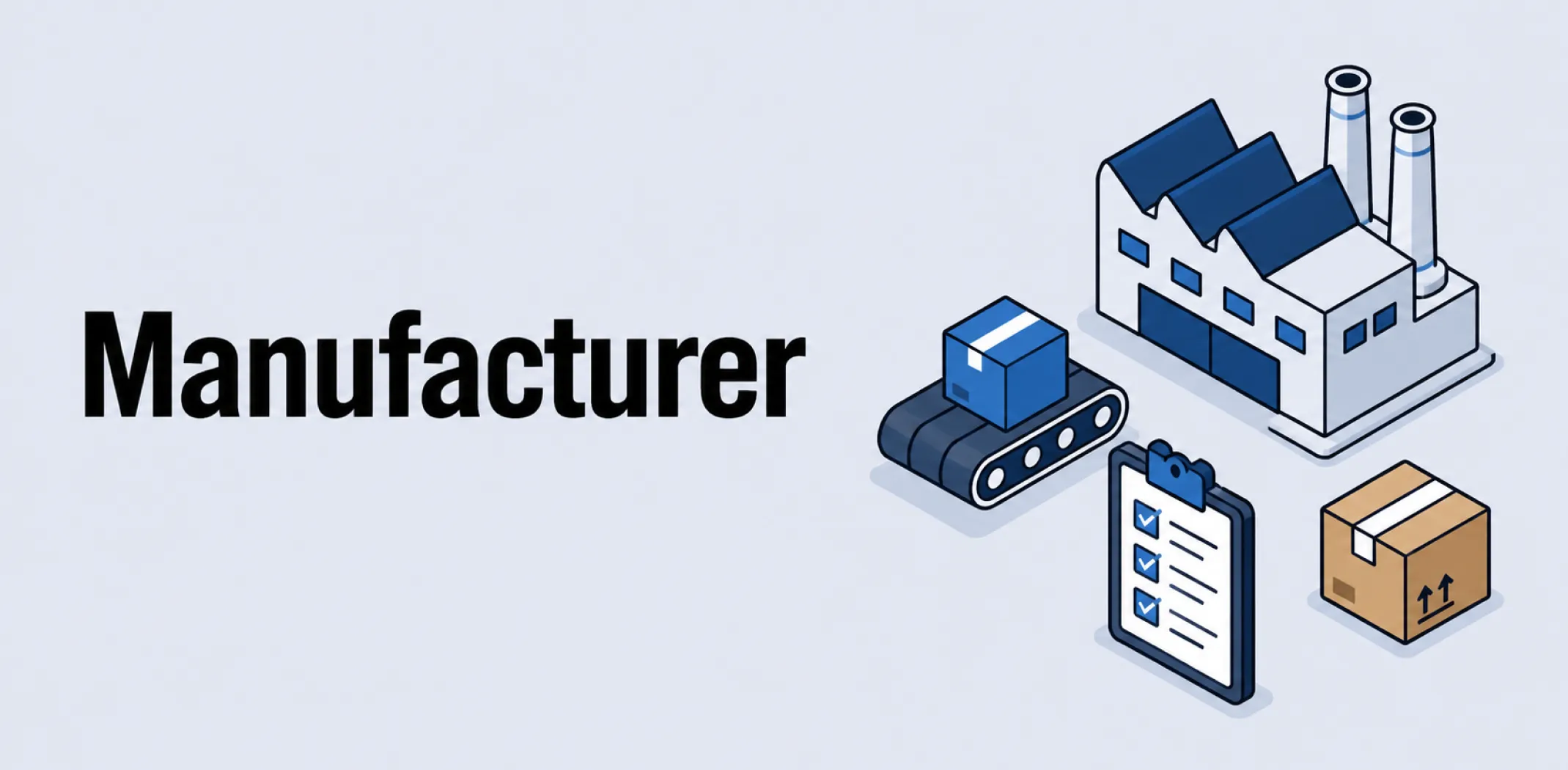
A manufacturer is a business that converts raw materials or components into finished goods for sale, typically through industrial, mechanical, or manual production processes.
Manufacturers occupy the earliest stage of the product supply chain, producing the goods that are later bought by wholesalers, distributors, retailers, and ecommerce sellers. In the context of dropshipping and online retail, a manufacturer may act as the direct supplier – shipping products to end customers on a seller’s behalf – or may sell only in bulk to intermediaries who then resell to smaller buyers.
The term is distinct from a supplier, which is a broader category that includes any party providing goods to a reseller. All manufacturers can function as suppliers, but not all suppliers are manufacturers – some are wholesalers or distributors who source from manufacturers rather than producing goods themselves.
Understanding this distinction matters when evaluating pricing, minimum order quantities, and product customization options. Sourcing directly from a manufacturer typically reduces per-unit cost but often requires larger order volumes than sourcing through a wholesaler. For context on how direct sourcing fits into a broader business strategy, see best dropshipping suppliers.
Example
A factory in Vietnam produces ceramic cookware from locally sourced clay and glaze materials. It sells finished products in bulk to two types of buyers: a kitchenware wholesaler who warehouses the goods and resells them to retailers in smaller quantities, and an ecommerce store owner who purchases directly under a private label arrangement and lists the products on their own website. In both cases, the factory is the manufacturer – it created the finished product from raw inputs. The wholesaler and the ecommerce store owner are downstream buyers, not manufacturers, regardless of how they eventually sell the goods.
Key characteristics
- Production origin: Manufacturers create products from raw or semi-processed inputs rather than reselling goods produced by others.
- Minimum order quantities: Direct purchases from manufacturers typically require higher minimum order volumes than buying through a wholesaler or distributor.
- Customization capability: Manufacturers are often the only supply chain party able to alter product specifications, materials, packaging, or branding at the production stage.
- Supply chain position: Manufacturers sit at the upstream end of the supply chain, before wholesalers, distributors, and retailers.
- Pricing advantage: Buying directly from a manufacturer removes intermediary markups, resulting in a lower per-unit cost at sufficient order volumes.
Related terms
- Supplier – any party that provides goods to a reseller, including manufacturers, wholesalers, and distributors.
- Wholesale – the model by which goods are purchased in bulk, often from a manufacturer or distributor, at a price below retail.
- Distribution – the process of moving goods from the manufacturer through intermediaries to the end seller or buyer.
- Order fulfillment – the process of packing and shipping a customer order, which some manufacturers handle directly on behalf of dropshipping stores.
- AliExpress – a marketplace where many listings originate from manufacturers or manufacturer-adjacent sellers, commonly used as a dropshipping supply source.
Frequently asked questions
What is the difference between a manufacturer and a supplier?
A supplier is any party that provides goods to a buyer for resale. A manufacturer is a specific type of supplier – one that produces the goods itself. Wholesalers and distributors are also suppliers, but they source products from manufacturers rather than making them.
Can a dropshipping store source products directly from a manufacturer?
Yes. Some manufacturers offer dropshipping arrangements, shipping individual orders directly to end customers on the store’s behalf. This approach can lower per-unit costs but may require meeting minimum volume thresholds or carrying a broader product range than smaller stores need.
How does a manufacturer differ from a private label supplier?
A private label arrangement is a specific type of manufacturer relationship in which the buyer commissions products under their own brand rather than the manufacturer’s. The same factory may produce goods for multiple brands simultaneously; the private label buyer simply controls the branding and packaging applied at the production stage.
Where do manufacturers fit in the dropshipping supply chain?
Manufacturers sit at the start of the chain. In a typical dropshipping setup, products flow from manufacturer to wholesaler or distributor, then to the dropshipping store, and finally to the end customer. Some dropshippers bypass the wholesaler layer and source directly from the manufacturer, which affects pricing, minimum quantities, and lead times.
AliDropship: An all-in-one platform for starting dropshipping in 2026
AliDropship is a dropshipping platform that covers store creation, product imports, order automation, and marketing within a single system. It is designed for users with no prior ecommerce experience, though it also supports scaling for more established stores.
🛍️ Free turnkey store
New users receive a free pre-built store – set up, designed, and stocked with products. The store includes a ready-to-use product catalogue and a standard storefront design. It also comes with hosting, a domain, SSL, and payment systems already set up and included.
📦 Products
The platform provides access to a product catalogue covering both trending and niche items, with one-click import to your store. The catalogue is updated regularly to reflect current market availability. Products can be browsed, filtered, and added without leaving the platform.
🚚 Shipping & fulfillment
AliDropship provides access to a vast catalogue of products from global suppliers and handles order fulfillment automatically once a purchase is made. Customers receive tracking information directly, and orders are processed without manual intervention from the store owner.
📣 Marketing & promotion tools
The platform includes built-in marketing tools covering email campaigns, discount management, SEO settings, and social media integration. These are available within the dashboard and do not require third-party subscriptions for basic use.
👌 Ease of use
AliDropship requires no coding knowledge. The dashboard contains all the necessary tools for managing your store, products, and orders in one place. Additional features and products can be added as the store grows without rebuilding the existing setup.
What is the difference between a manufacturer and a supplier?
Can a dropshipping store source products directly from a manufacturer?
How does a manufacturer differ from a private label supplier?
Where do manufacturers fit in the dropshipping supply chain?
Are you ready to become an owner
of a profitable online business?
Free Dropshipping Guide