The Checkout Meltdown: Allowance For Kids That Ends The Toy-Aisle Wars

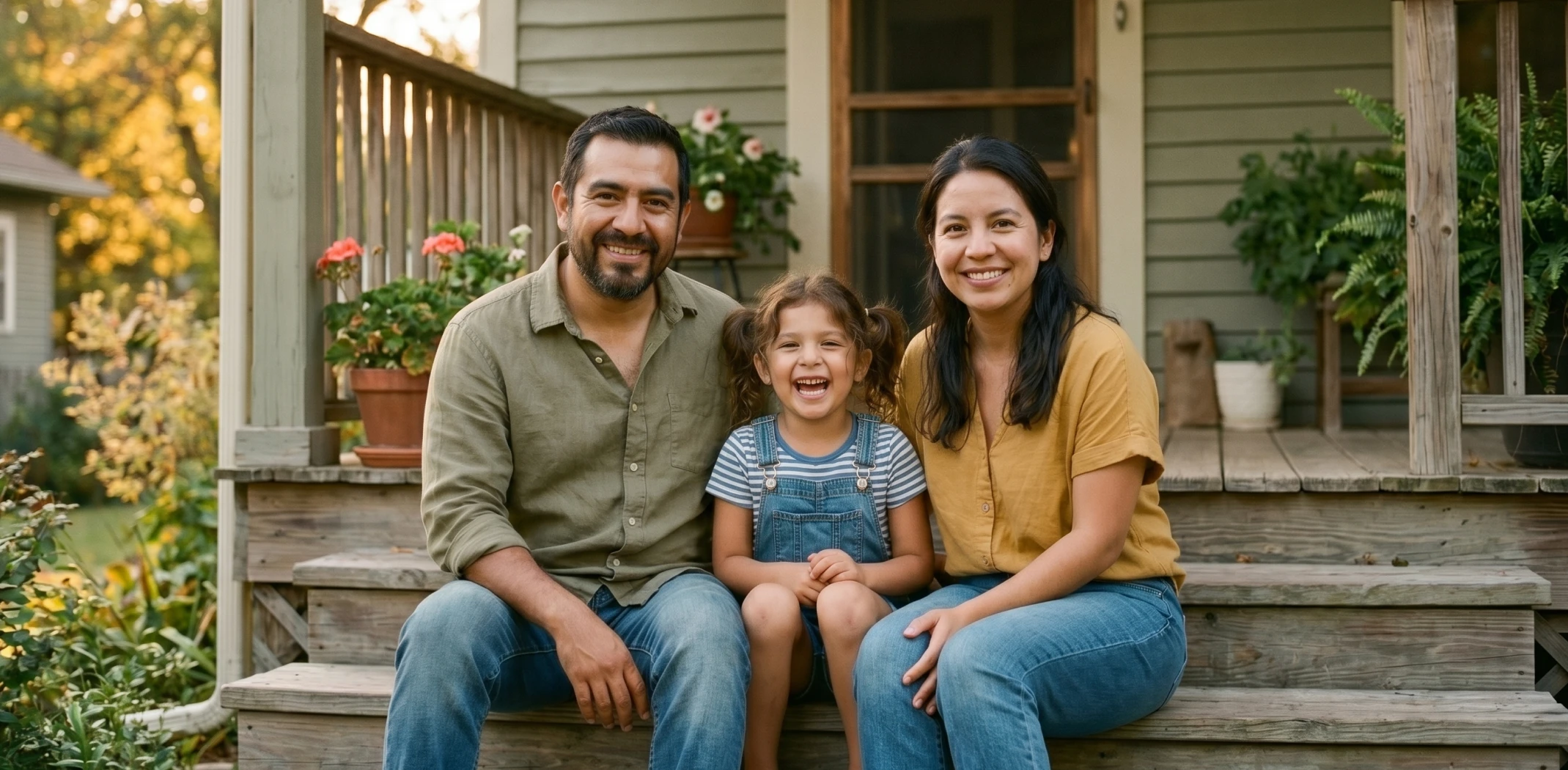
Logan Reyes wasn’t researching allowance for kids that Saturday. He was losing a war at register six. His daughter Nova, 7, pointed at a $58 robot dog and asked the question he couldn’t answer: “Why can you have the card and I can’t have the dog?”
Logan is 35. He runs the produce department at a Wichita supermarket. He grew up in a house where money was a fight you heard through a wall – his financial education was a credit card at 18 and years of cleaning up after it. In the car, Nova added the knockout punch: “Is the card where money lives?”
Eleven weeks later, Nova paid for that robot dog herself – counting bills onto the counter, slow, like a banker. The checkout wars ended somewhere around week three. Here’s what happened in between.
Why money habits are set by age 7 – and school won’t make it
Nova’s timing was better than she knew:
Logan’s week told the whole story. Tuesday: meltdown number three this month, ended with a $9 toy and a cashier’s look he still thinks about. Wednesday: his own card statement – $214 of “little” impulse buys. Nova didn’t invent grabbing things at checkout. She’d been taking notes. Thursday: five dollars walked out of his wallet to buy slime from a kid at school – “you have lots of the paper ones, Daddy.” Friday: the school newsletter – no financial literacy in the curriculum until high school.
Saturday night, after the robot-dog standoff, he bought the Guide. It cost less than the toy he’d caved on Tuesday.
Allowance for kids: what Logan tried first – and why it failed
Like every parent, he’d already tried the three default moves:
Caving at the register
$7–$9 a trip to keep the peace. Cheaper than therapy, but every cave taught Nova the real rule: loud enough wins.
The “because I said so” lecture
Works for about ninety seconds. Transfers zero knowledge. A no without a why is just a delayed yes.
A $149 kids’ money video course
Cartoon pig, songs about coins, zero personalization. Nova watched one episode and asked for the robot dog again.
I grew up in a house where money was a fight you heard through a wall. I wasn’t going to hand her that. I just didn’t know what to hand her instead.
The Guide asked six questions: her age, whether she gets an allowance, what she already knows, the family’s money style, what she wants to buy right now, and which behavior worries him. He typed “impulse spending” and “a $58 robot dog” – and got a plan built around exactly those two answers.
The 4 pieces the Guide built around one robot dog
Five minutes after the six questions, four pieces – each one aimed at a 7-year-old who wants a $58 toy:
The part that got me was the script for when she wants to quit. It knew she’d want to quit before I did. That’s when I trusted it.
School won’t teach your kid money. The checkout aisle will.
Six questions about your child – age, allowance history, what they want to buy, what behavior worries you. The Guide returns an age-based allowance system, the save-spend-give jar split, hands-on spending games, a visual goal tracker, and a 12-week plan of 10–15 minute lessons. Ages 4–16, one purchase for every kid you’ve got.
Kids’ money courses cost $50–$200
$7
One-time · Instant access · 30-day refund, no questions · Private
Eleven weeks to one robot dog: the timeline
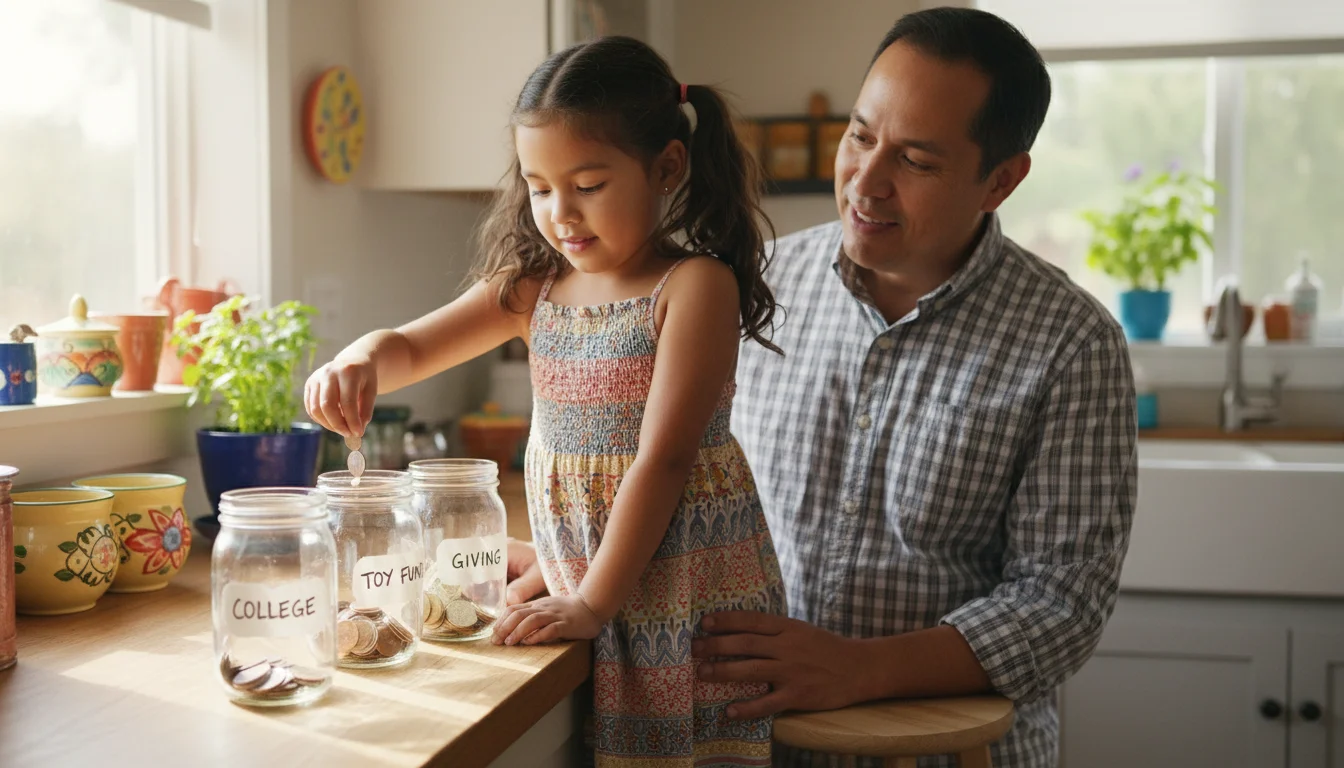
Sunday morning, three mason jars from the garage, one marker, one printed tracker. Total setup: twenty minutes.
Week eleven she paid for that dog with her own jar money, slow, like a banker. The cashier clapped. I had something in my eye. And the buyer-satisfaction talk after – “was it worth eleven weeks?” – she said yes, but next time she’s saving for something bigger. That’s the whole curriculum, right there.
How much allowance at every age – the ladder parents ask for

The Guide tunes this to your child, but the ladder looks like this:
What that kind of guidance usually costs:
I’m not great with money myself. Can I really teach this?
That’s the most common reason parents buy it – Logan included. Every lesson comes with what to say and what to do, step by step. No lecture to invent, no jargon to translate. Most parents report learning alongside the kid – Logan’s own impulse spending dropped $214 to $61 a month by week eight, because the 3-day rule works on grown-ups too.
What other parents built with the same Guide

“Three kids – 5, 9, and 13 – and one purchase generated a different plan for each. The 13-year-old got bank account homework, the 5-year-old got coin games. The 9-year-old saved $42 for cleats and stopped asking me to buy them. Three plans, seven dollars.”
April J. · mom of three, Fort Wayne IN

“Raising my grandson, 10. Nobody taught me this stuff either – we’re learning together, like the guide promised. He opened his first savings account last month and checks the balance like it’s a video game score. $67 and counting.“
Russ T. · grandfather, Reno NV
Beyond the allowance system – Child’s First Money Guide includes a savings goal planner with a colorable tracker, the quit-proof conversation scripts, a first-bank-account guide, age-matched lessons from 4 to 16, and lifetime re-runs – one purchase covers every kid as they grow.
How to start an allowance that actually teaches something
Use their want as the engine
The robot dog isn’t the enemy – it’s the curriculum. A kid saving for something real learns faster than a kid doing worksheets.
Pay on a schedule, not on mood
Same day every week, rain or shine. Predictable income is the lesson – the amount is just the prop.
Split it the moment it lands
Save-spend-give, three jars, done in ten seconds. The Guide sets the split for your child’s age.
Let the spend jar make mistakes
A $3 squishy toy that breaks in a day teaches more than any lecture. Cheap mistakes now beat expensive ones at 23.
Make the math visible
A tracker on the fridge they color themselves. Kids don’t quit progress they can see – and neither do adults.
Logan didn’t become a finance dad. He’s still the produce guy. But the wall his parents argued behind – in his house, that wall came down. There are three jars on the counter instead, and a kid who counts like a banker.
Raise the kid who checks the price tag.
The Guide fits allowance, jars, and lessons to your child’s exact age.
Six questions about your child. Out comes an age-based allowance system, the save-spend-give split, hands-on spending games, a colorable goal tracker, and 12 weeks of 10-minute lessons – ages 4 to 16, every kid in the house.
Kids’ money courses cost $50–$200
$7
One-time payment · Unlimited re-runs · Instant access
✓ 30-day money-back guarantee
Build your child’s first money system – six questions tonight, three jars on Sunday, and a kid who counts like a banker by fall.
Should allowance be tied to chores?
How much allowance by age?
What is the average allowance for a 10 year old?
Is allowance good for kids?
Why is financial literacy for kids important?
What is the save-spend-give method?


Recommended for You